





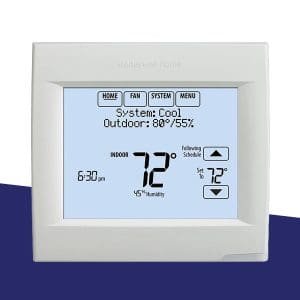
Your HVAC system is only as powerful as the thermostat that controls it. If you recently upgraded your heating and cooling system or you still have a manual thermostat in your home, it is a good idea to consider upgrading to a programmable thermostat.
With so many options available, it can be hard for homeowners to know which programmable thermostat to purchase. We recommend homeowners evaluate which features best fit their lifestyle. To help homeowners do this, we are sharing some key features of programmable thermostats.
The Best Programmable Thermostat
- Programmable temperature. Every programmable thermostat allows you to set different heating and cooling schedules. What you should pay attention to is how many different schedules can be set. Some programmable thermostats will let you set a temperature schedule for every day of the week, while others only allow one schedule for weekdays and one for weekends. There are also models available that allow you to set different temperatures for specific times of day, days of the week and multiple rooms in your house.
- Wi-Fi accessibility. A smart thermostat that connects to Wi-Fi allows you to control your thermostat via a smartphone, tablet or laptop. This feature is great when you are out of town and need to change your temperature settings because the weather changes drastically or your travel plans change unexpectedly.
- 24/7 troubleshooting. A smart thermostat can also create a link between your home and your preferred HVAC service provider. If there is an issue with your heating or cooling system — or it stops working completely — your smart thermostat will send you and your HVAC service provider an alert.
- Modern display and controls. Another feature to think about is the thermostat’s display. Some thermostats have large backlit displays and intuitive touchscreen capabilities to make it easier for users to see and adjust settings. Some models will also come equipped with voice activation controls.
- Compatibility. Unfortunately, not every programmable thermostat will be compatible with your HVAC system or your internet provider. Be sure to check the compatibility requirements before making a purchase.
Which Programmable Thermostat is Right for Your Home?
If you enjoy technology and have a busy lifestyle, a smart thermostat with Wi-Fi accessibility might be the right choice for you. If all the bells and whistles and advanced programming options are not important to you, a more standard programmable thermostat could be the best option.
Either way, it’s important to do your research before purchasing a new programmable thermostat. If you’ve read this blog post, you’re off to a great start. Have questions? Contact us today. Our team at Bell Brothers would be happy to discuss which programmable thermostat would be best for your home, lifestyle and comfort needs.
HVAC Tips for Winter to Keep Your System Running Smoothly
Winter weather can be harmful to your home’s heating and air conditioning system. One of the most important HVAC tips for winter is to treat your system like you would your car in icy conditions, with extra care and attention. Just as you take safety precautions when driving on slick roads, you should also take steps to protect your HVAC system from freezing temperatures, snow, and ice buildup. Following these tips can help extend the life of your system and keep your home comfortable during the coldest months.
Clear Snow and Ice from Outside Pipes
While you’re out clearing snow off the driveway, make sure to check the furnace intake and exhaust pipes. These pipes are usually a foot or two above the ground, so if there’s more than a few inches of snow, it’s important to check them. Removing snow and ice will help prevent thawing and refreezing in the pipes, which can cause your furnace to quit working — one of the most common issues that winter HVAC tips aim to prevent.
If your furnace suddenly stops working during the colder months, it could be due to blocked intake and exhaust pipes. As part of your HVAC tips for winter checklist, try turning off the power to the furnace, clearing the pipes, and then turning the power back on. If there’s still an issue, a Bell Brothers service technician can come to your home to investigate and resolve the problem.
Remove Snow and Ice from the Gas Meter
It’s also important to keep the gas meter clear of snow and ice. It not only records how much gas is used, but it also regulates the pressure of the gas entering your home. If the vents on the meter become plugged by snow or ice, it can cause erratic pressure, which is why HVAC winter tips often stress this step. This can cause the furnace or water heater to not work properly.
Troubleshooting Tip: If the furnace or water heater pilot light won’t stay on, it could be a sign the gas pressure is not stable. Check the meter to ensure it isn’t covered with snow and ice. If it is, carefully clear it off. If the equipment is still not working properly, schedule a Bell Brothers service technician to take a look.
Don’t Cover Your Outdoor Air Conditioning Unit
You may have read or heard that homeowners should cover the outdoor air conditioning unit to protect it from snow. However, according to expert HVAC tips for winter, this is actually incorrect. Covering the unit can allow moisture to build up, causing damage to the unit. It also provides a nice warm place for mice or other rodents to build a nest and pass the time by chewing away at the wires in the air conditioner.
Instead, keep the area around the unit clear and let it breathe naturally through the winter months. This small step, along with other HVAC winter maintenance tips, can help you avoid costly repairs come springtime.
Learn more: Improve HVAC Energy Efficiency This Winter
Protect Your HVAC System All Season Long
Let Bell Brothers help you protect your HVAC system this winter. Whether it’s following HVAC tips for winter like clearing snow from vents or avoiding unnecessary covering of your AC unit, small actions can make a big difference in system efficiency and reliability. Give us a call or contact us online for professional guidance and service.
One of the questions we get all the time — why is furnace and AC maintenance so expensive? Chuck is here to explain why regular maintenance is important - just like changing the oil in your car - and how it might actually save you money in the end.
Edited June 29th, 2021
If it's time to replace or install a new HVAC system in your home, what's the first thing you do? Like so many, you pick up the phone and call a few local contractors to get an HVAC quote. Before you know it, you're bombarded with information on types of furnaces and ac units and terminology like "one-stage furnace, two-stage compressors" - hey, it's enough to give anyone "stage" fright.
HVAC contractors like Bell Brothers mean well, but sometimes it's easy to forget that while HVAC equipment is second nature to us, talking about it can sound almost like a foreign language to others. Doing a little research when shopping around for a new HVAC system can make all the difference to ensure you make an informed decision. To make it a little easier, we've put together notes about the different air conditioning and furnace types, as well as a helpful tip from the experts for HVAC quotes.
Types of Furnaces
First, it's important to remember that "one size fits all" doesn't apply here. The system that is best for you will depend on the size of your home, your budget and your heating requirements. In Des Moines, the requirement is that a system must be big enough to heat your whole house to at least 70° when its -5° outside. There are three types of furnaces: single-stage, two-stage and variable-speed.
Single-Stage Furnace
This type of furnace runs on one level: high. The furnace will run to whatever the thermostat is set at and then shut off. So, it's either on (running at 100% capacity) or off altogether. This type of furnace is really great for when it's really, really cold out! On a milder winter day in the 25°-45° range, however, you'll get frequent and short heat cycles.
Two-Stage Furnace
A two-stage furnace runs like two furnaces in one because it has two stages: high and low. The low stage will run the majority of the time at about 60% of its capacity. On those really cold days, your furnace will automatically kick up to high. What does that mean for you? It means reduced energy bills since you're not running your heat unnecessarily. It also means increased air circulation and higher air quality. Lastly, it means a more consistent home temperature.
Variable-Speed Furnace
A variable-speed unit is what we call a "communicating" system. The furnace knows what the outdoor temperature is and will automatically adjust the indoor temperature accordingly. It will run at between 40% and 100% of its capacity, depending on what it needs to do in order to maintain the desired temperature in your home. And, it can adjust itself by increments as low as 1%. It's pretty incredible. But, why should you care? Because your heat will rise, not your utility bill. Also, you'll experience better comfort, cleaner air, enhanced humidification and balanced temperatures throughout the home. It's really the ultimate in comfort and efficiency.
Types of Air Conditioners
Just like finding the right furnace for your home, it's equally important to choose the right air conditioning system. Again, it depends on the factors such as the size of your home, number of levels, your budget and cooling requirements. In Des Moines, Iowa the requirement is 95°. Meaning, the system we design for you must be able to cool your whole house to 95° or lower. There are three types of air conditioning systems:
Single-Stage Compressor
This is your basic high efficiency air conditioner. Just like the single stage furnace, the single stage air conditioning unit has one level: high. It will run at full capacity until the desired temperature is met and then will shut off. This type of A/C is really great for those really hot days. On milder summer days, however, say in the 75°-85° range, you'll experience more off-and-on cycling and shorter run times.
Two-Stage Compressor
The two-stage compressor has two levels: high and low. The two-stage conditioner runs on high when you really need it on those humid summer days and kicks back down to low when temperatures are more moderate.
Variable-Speed Compressor
A variable-speed compressor is great because it won't use more energy than it actually needs to cool your home. Less wasted energy means lower utility bills for you. Also, because this type of unit has long run times, you'll experience lower humidity and balanced temperatures throughout your home. Cool, right?
Comparing Contractors
Now that you know the differences between single-stage, two-stage, and variable speed, you'll feel more confident when talking to an HVAC contractor. Now it's time to get some HVAC quotes! But before you go, we want to leave you with this valuable tip from the experts:
When comparing HVAC quotes from contractors, make sure you are comparing apples to apples.
What does that mean? Well, you might think you're getting a better deal for less from one contractor when you're really just getting less. For example: You get two quotes for a 96-efficient system, but one proposes installing a single-stage furnace or air conditioner and the other proposes a variable-speed furnace or air conditioner. Well, they aren't the same thing and price difference will vary dramatically. So, ask questions and make sure you're comparing two bids that include the same type of unit. With your home comfort and hard-earned money at stake, it is important to take the time to learn which HVAC system would be best for your home. To learn more, ask the experts; Bell Brothers are always here to help.
Don’t Be Duped: 5 Tips For Owning Your Furnace Repair
Furnace repair scams are more common than most homeowners realize, especially during the tail end of Iowa’s harsh winter months. With just a few bitter cold spells left, you might be hoping your furnace can hold on a little longer. But then, during a sudden temperature drop, your heating system takes a dive. You know you need a repair, and fast, but how can you be sure the company you call won’t take advantage of the situation?
1. Watch Out for Furnace Repair Scams with “Too Good to Be True” Pricing
A quick internet search will pull up a handful of HVAC repair companies. Some will try to differentiate themselves with a low trip-charge fee to inspect your system. The savings may calm your nerves, that is, until you get the final bill. Often, these companies make up the difference with unexpected labor or parts charges, a hallmark of many furnace repair scams. Instead, look for companies that use a standardized pricing system. That way, you know you're not getting the short end of the stick.
2. Look for a Licensed HVAC Technician
Did you know that not every HVAC company requires its technicians to be licensed? Even years of experience in the business doesn't equate to the accreditation of holding an apprenticeship, journeyman's, or master's license. Holding a license means the technician must complete continuing education courses and abide by a universal set of standards. If you're unsure of the technician's credentials at all, feel free to ask for their license and registration.
3. Demand Data from Your Furnace Technician
If your technician is spending more time trying to convince you to purchase new equipment rather than troubleshooting the problem, that's a red flag. In this day and age, there are tools to measure just about everything, combustion, airflow, electrical consumption, voltages, you name it. So, if you're being told you need to overhaul your heating system, ask for the analytics to back it up. There are always anomalies, like an electrical failure, that may be tough to measure and diagnose at first. However, these types of repairs shouldn't require you to replace your system.
4. Don’t Be Bullied by HVAC Scare Tactics
In a pinch, technicians may try to use scare tactics to pressure you into buying new equipment. While situations like carbon monoxide poisoning and heat exchanger failure are very serious, the technician's claims should always be rooted in fact. If you're ever unsure, conduct some of your own research. Reputable organizations like the Air Conditioning Contractors of America are a great resource for homeowners seeking unbiased guidance. Protecting yourself from scare tactics is one of the best ways to avoid falling for furnace repair scams.
5. Go With the HVAC Warranty
The last thing you want is to shell out money for a repair only to have it break again one or two years down the road. Do yourself a favor, look for companies who offer repair warranties. Some companies may even cover the cost of poor repairs from previous homeowners. It never hurts to check! And, like any other major decision, feel free to seek out a second opinion. No one company will have all the answers, and you don't want to be left out in the cold.
It’s unfortunate that some companies may try to capitalize on you during a time of need, which is why furnace repair scams are more common than you might think. Knowing what to watch for helps protect your family, your finances, and your peace of mind. That’s why at Bell Brothers, we take service personally. It’s simple, we treat our customers how we’d like to be treated.
Bell Brothers is committed to training the next generation, and we added a state-of-art HVAC apprenticeship training facility in 2012. Listen as Chuck Gassmann shares why apprenticeship training programs are vital to help fill more than 100,000 HVAC technician jobs by 2025.
See all the advantages of a career with Bell Brothers — including no college debt!
You’ve heard about apprenticeship training, but what exactly does it entail? Watch the video below to see Chuck Gassmann explain the apprenticeship process and what you will learn in the training program.
Contact us today to learn more about the apprenticeship training program!
Did you know? The starting salary for an HVAC service technician is higher than many of those for young adults with a college degree. The skilled trades provide a great career opportunity for bright young men and women who like technology, working with their hands and want to make a difference in others lives. Watch the video below to learn more.
See all the advantages of a career with Bell Brothers — including no college debt!
Updated: June 30, 2025
Energy costs are rising right along with Iowa’s summer temperatures, making it more important than ever to learn how to save on electric bill in summer. Since you’re running your air conditioner day and night, you might dread reading that utility bill each month. Don’t give up on saving energy and money, though!
With these seven tips, you can keep your family cool and comfortable while keeping energy costs low.
1. Replace the furnace filter.
We really can’t say this enough. If your furnace filter is dirty or clogged, it will also affect your air conditioning. Even normal dust build-up can reduce airflow by one percent per week.
2. Use a programmable thermostat.
If you’re away from home all day, why waste that energy to cool the air in your empty house? According to the U.S. Department of Energy, homeowners can save up to 10 percent a year on cooling (and heating) expenses by turning the thermostat back seven to ten degrees for eight hours a day.
Note: We don’t recommend you set the thermostat back while you’re not home during periods of high humidity or extreme temperatures since your system will have to work too hard to catch up.
3. Set thermostat at 74-76 degrees.
We’re all guilty of setting our thermostats in the 68-72 range. When you set your thermostat just one degree warmer, you can save up to 2 percent on cooling costs.
Learn more: 7 Common HVAC Myths Dispelled
4. Schedule an air conditioner tune-up.
We recommend annual maintenance to ensure your air conditioner is working at its best. A technician will clean and inspect the components and check any damages or safety hazards. If it’s not properly cleaned every year, your system could be losing up to 40 percent efficiency.
Regular AC maintenance and tune-ups are one of the most effective ways how to save on electric bill in summer while keeping your cooling system running smoothly.
5. Change direction of ceiling fans.
Make sure ceiling fans are rotating counter-clockwise to push the air down onto you.
6. Shade the air conditioning unit.
Direct sunlight on a window unit or the outdoor unit of a central air conditioning system adds to the workload of the equipment. Lend it a hand by keeping it shaded.
Learn more: Simple Summer AC Repair Tips to Try Before Calling a Pro!
7. Close the curtains.
Keep window blinds and curtains, especially on the south and west sides of the house, closed during the day. Direct sunlight can add unintentional heat to your home.
If you follow this advice and are still struggling to manage cooling costs, upgrading to a more energy-efficient air conditioner and furnace system could be the key to how to save on electric bill in summer long term.